Book Review: Nowhere Burning by Catriona Ward
Posted on March 14, 2026 Leave a Comment
I received a review copy from the publisher. This does not affect the contents of my review and all opinions are my own.
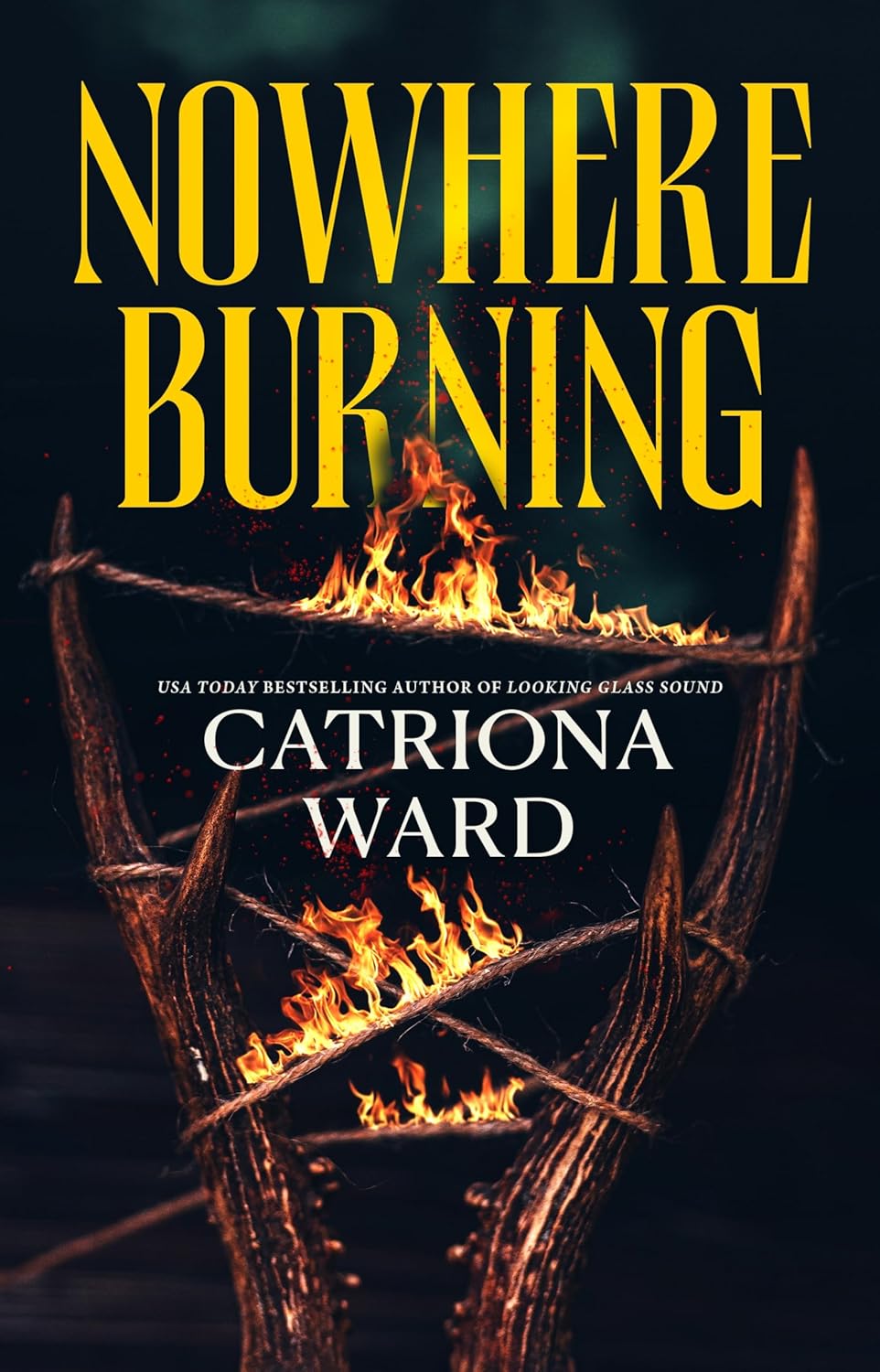 Nowhere Burning by Catriona Ward
Mogsy’s Rating: 3 of 5 stars
Genre: Horror
Series: Stand Alone
Publisher: Nightfire (February 24, 2026)
Length: 304 pages
Author Information: Twitter
Catriona Ward has built a reputation for writing horror that’s strange, unsettling, and often surreally disorienting by design. Nowhere Burning continues following in that same vein, though in this case, it might have gone a bit too far, pushing the story into hazy disjointedness. As a result, I didn’t quite take to this one as much as I’d hoped, finding it occasionally difficult to stay invested in what was happening from one section to the next.
In one major thread, we follow Riley, a teenage girl on the run with her younger brother Oliver. Desperate to escape their abusive foster home, she decides to seek out a place called Nowhere, rumored to be a safe haven hidden deep in the mountains where runaway children can live off the grid. The place, however, comes with its own dark history. The land once belonged to a reclusive actor named Leaf Winham, who built the sprawling ranch retreat years earlier. But what was meant to be a private sanctuary eventually became the center of a horrific scandal before a devastating fire consumed the property. All that’s left now are the burned-out ruins and the bad memories and ugly rumors that have grown around them.
In addition to Riley’s story, a couple others also run alongside in tandem. One follows a pair of filmmakers digging into the ranch’s past for a documentary, interviewing people who were connected to it from before the fire and trying to piece together what really happened. Another thread looks back at Leaf Winham and the early days of the estate, hinting at the secrets that shaped its creepy reputation. As the novel moves between these perspectives, details about Nowhere, its former inhabitants, and the events that led to its ruin gradually come together, showing how past and present collide.
Unfortunately, with so many separate threads and sudden jumps in time, the plot can start to feel a little choppy and hard to follow, and not every storyline gets the space it needs to fully develop. Riley’s is by far the most compelling and arguably the most important; some of the others, however, feel less essential. These came and went like side narratives that only appear in short bursts to give background information before shifting back to Riley’s perspective, which I started looking at as the “main” story. At least her chapters had plenty of emotional themes to anchor them, like her love for Oliver and her determination to secure a safe place for them to live. This was not the case with the “before” and “after” storylines, whose purposes were less defined and didn’t hold my interest as much.
That said, Ward still does a solid job creating a strong sense of place. The isolated mountain setting gives an unsettling edge right from the start, and once we get to the section where Riley finds Nowhere, the behaviors of the young people living there make things feel even more off. And no wonder. Bad things have happened in this place, and the kids here now have had bad things happen to them. The book is heavy with themes of trauma, abuse, and the misery that leads people to make desperate choices when they feel trapped with no way out. It can be difficult read at times.
At the same time, the nebulous tone that defines much of the author’s work can make the reading experience frustrating. The story often hints at deeper, hidden meanings without fully explaining how everything fits together. Granted, it’s clear that some of the vagueness is intentional, since there are secrets buried in the timelines before and after Riley’s storyline that don’t connect until the very end. And yet, the confusion it leads to doesn’t always feel rewarding since the story withholds too much information for too long.
In the end, Nowhere Burning ended up being a bit of a mixed bag. The premise is intriguing, the setting works well, and Riley makes for a strong central character. But the crowded structure and hazy storytelling kept the book from fully coming together for me. I’ve enjoyed Catriona Ward’s previous books (even the more surreal ones!) but this one might end up being my least favorite. Fans of her dreamlike style may still enjoy the ride, but for me this one ultimately landed somewhere in the middle.


Book Review: The Red Winter by Cameron Sullivan
Posted on March 11, 2026 6 Comments
I received a review copy from the publisher. This does not affect the contents of my review and all opinions are my own.
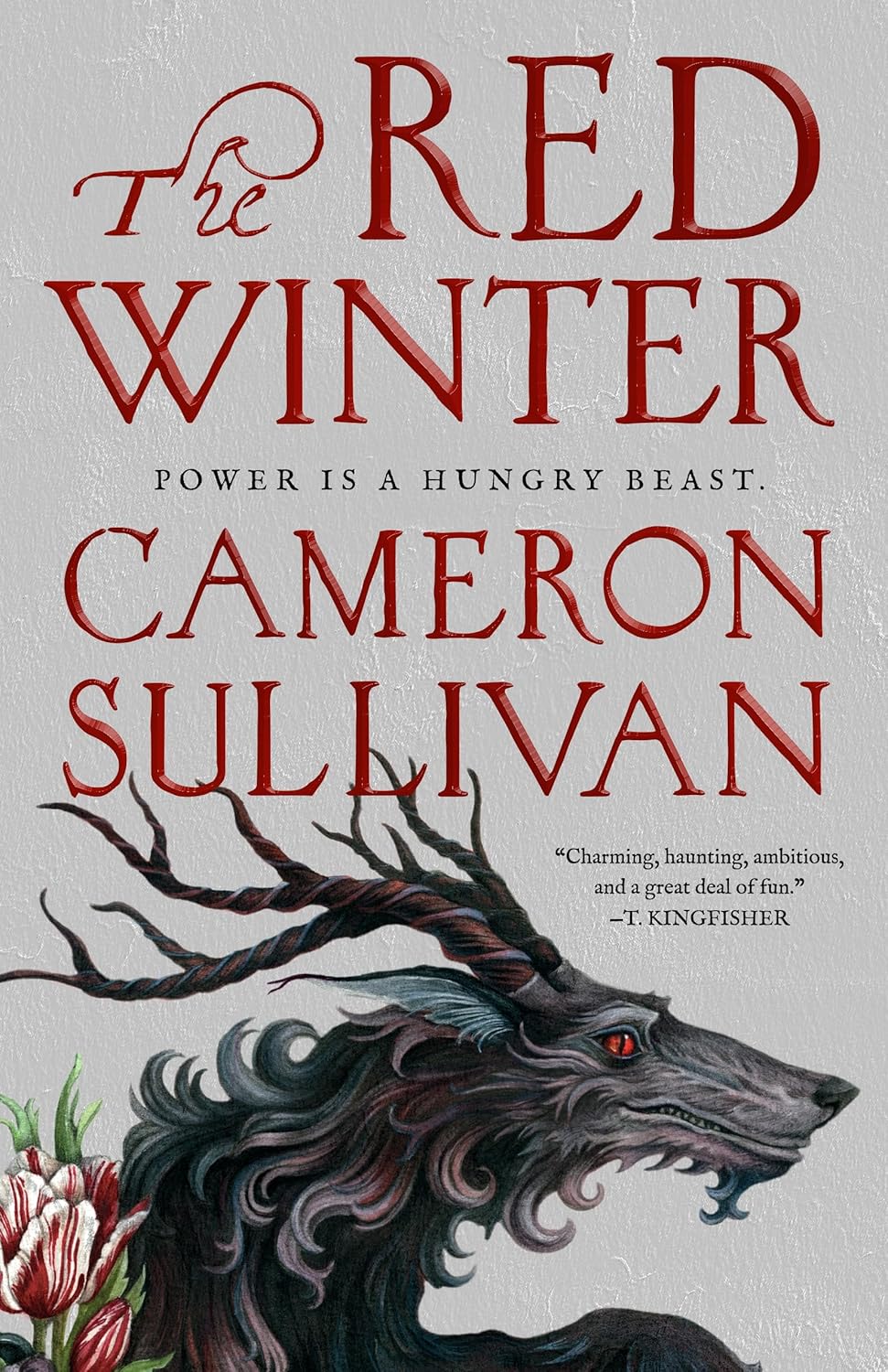 The Red Winter by Cameron Sullivan
Mogsy’s Rating: 4 of 5 stars
Genre: Horror, Historical Fiction
Series: Stand Alone
Publisher: Tor Books (February 24, 2026)
Length: 535 pages
Author Information: Website
Historical horror with a generous heaping of sardonic humor. That’s the way I would describe The Red Winter by Cameron Sullivan, which draws inspiration from the real-life mystery of the Beast of Gévaudan, the name given to the man-eating creature that terrorized the French countryside in the 1760s, killing more than a hundred people. This novel is a retelling of those events, with a mythical twist.
Told as a memoir written by an ancient warlock named Sebastian Grave, the main plot is a detailed account of his involvement in the hunt for the Beast. Split into two distinct timelines, one follows him in the past as he is called to the region to deal with the creature, and then the second one follows him years later, when he has been asked to return once the killings start up again. Could the attacks from these two periods be related? The story jumps between these two timelines as Sebastian tries to figure it out, reliving the past to find clues that might connect them to the present.
At the same time, running through the story are also a few side threads that gradually connect Sebastian’s backstory to the larger picture. With his body serving as a vessel for a powerful demon named Sarmodel, he has been wandering the earth for centuries, the arrangement giving him immortality as well as access to certain magical abilities. An additional narrative which unfolds in a series of interludes details the succubus Livia’s exploits as she is tasked with carrying out a mission related to Joan of Arc, then later the relic associated with her remains. All these pieces come together to give the novel a wider scope, revealing the events that helped set the stage for the beast itself and the forces driving the violence in Gévaudan.
Despite the shifting timelines, the story is easy enough to follow, though certain sections are more interesting than others. But even with its complex structure, the mystery is engaging, becoming more solid as each perspective adds more context little by little. Sullivan does a good job of dropping just enough information in each chapter to keep the reader satisfied and feeling like the developments are earned rather than rushed. However, I did occasionally find the interruptions from Livia’s interlude chapters distracting, since more than once they pulled the reader’s attention away just as the main storyline was reaching its most important moments. And speaking of distractions, this might also be a good time to mention the footnotes, which The Red Winter uses quite liberally. The book really leans into this stylistic quirk, so how much you enjoy them will probably depend on what kind of reader you are.
The book also undoubtedly falls into the horror genre and gets pretty gory and intense when it comes to the beast side of things, especially its attacks. That said, the author balances the brutality and carnage with plenty of humor, especially through the narration and those aforementioned footnotes. Sebastian is a fantastic character to spend time with, and as you might expect after centuries of life, he’s amassed a vast amount of knowledge and has at least one cynical observation to offer on just about everything. He and his demon Sarmodel provide lots of lighthearted back-and-forth, adding a much-needed layer of levity to what could otherwise be a very grim and heavy story.
For a debut, The Red Winter is genuinely impressive. Sure, there are a few pacing issues to smooth out, along with some timing hiccups and moments where the character development could have gone a bit deeper. Still, these are relatively minor in the grand scheme of things, and the book remains highly readable. Sullivan clearly knows the kind of story he wants to tell, and his confident storytelling reflects that. The blending of history, occult magic, and a touch of werewolf lore results in a very distinct vibe, and it’s this creativity and overall polish that give it an edge, helping the novel stand out from your typical werewolf tale.
If you enjoy stories that mix real historical events with speculative elements like horror and the supernatural, then The Red Winter will likely be right up your alley. It’s an entertaining read packed with atmosphere, combining bloody horror with a streak of irreverent humor that helps it feel fresh even in a genre that’s already pretty crowded.

Book Review: House of Splinters by Laura Purcell
Posted on March 6, 2026 8 Comments
I received a review copy from the publisher. This does not affect the contents of my review and all opinions are my own.
 House of Splinters by Laura Purcell
Mogsy’s Rating: 4 of 5 stars
Genre: Horror, Historical Fiction
Series: Stand Alone
Publisher: Blackstone Publishing (February 10, 2026)
Length: 346 pages
Author Information: Website | Twitter
My queen of gothic horror is at it again! Laura Purcell returns to the haunting concept she first introduced in The Silent Companions, bringing back those creepy wooden figures in House of Splinters. As a long-time fan of the author, stepping back into that eeriness and uncanny atmosphere felt like coming home, though as it turns out, home might not be the best choice of word.
The story follows Belinda Bainbridge, who has spent most of her life under the thumb of her anxious, overbearing mother. So when her father-in-law dies, prompting her husband Wilfred to relocate his family to take over management of his ancestral estate, Belinda quietly hopes the change will give her the chance to build a life of her own. With her young son Freddie approaching his breeching and another child on the way, the move feels like a turning point. However, the one tie from her past that she insists on bringing with her is her lady’s maid, a steady source of familiarity and reassurance as she prepares to leave her old life behind.
But when they arrive at the estate, known as the Bridge, Belinda quickly realizes it is nothing like the future she imagined. The place had never seemed particularly cheerful during her earlier visits, but now it’s practically falling apart. The house is in disrepair, the gardens neglected and lifeless. The villagers, long under the Bainbridges’ care, are resentful and wary of the family, whispering that they are cursed. Indeed, the Bridge has had its share of dark history, including an ancestor rumored to have been executed as a witch, the mysterious death of Wilfred’s sister when they were children, and the accidental death of a servant. Then there are the wooden figures known as silent companions, flat wooden cutouts once popular as household decorations during the Dutch Golden Age. Those that once belonged to Wilfred’s mother are found locked away in a room Belinda hopes to turn into a nursery, but once they are uncovered, strange things begin to happen. Freddie becomes oddly fascinated with them, talking to them and treating them like real people. And with the birth of her second child drawing closer, Belinda begins to fear that something is deeply wrong with the house and that something is haunting her family.
Considering The Silent Companions was the novel that first made me fall in love with the author’s work, one of the most exciting aspects of House of Splinters is how it reconnects with the world of the earlier book. While this novel tells a completely new story with completely new characters, Purcell cleverly revisits some familiar ground by returning to the Bainbridge family and the Bridge. Fans will recognize certain elements echoed in this one, like a pregnant protagonist, the rundown estate, the unwelcoming villagers, and of course, the stars of this horror show which are the silent wooden figures themselves. At the same time, this isn’t a rehash of the original plot with just a few things tweaked. Rather, it feels more like another chapter in the wider legacy of the unfortunate Bainbridges, exploring how multiple generations continue to become haunted by the house and the companions.
One of the things Purcell always does so well is atmosphere, and House of Splinters certainly delivers on that front. The Bridge is practically a character in its own right, and it serves as the perfect gothic setting with its isolation and decaying front, full of secrets that quite literally refuse to stay buried. You never know what might emerge from its overgrown grounds or from the shadows within the house, because the entire place carries an air of unease and the sense that something isn’t right. I’ve also always felt the companions concept had far more potential to explore, and they are again put to excellent use.
Beyond the paranormal elements, the novel also heartily embraces all the classic gothic themes. We have Belinda, a particularly sympathetic protagonist who wants so badly for her new life in her new home to work out, but feels increasingly trapped by the family secrets, societal pressures, and the guilt brought on by unrealistic expectations. And whenever children are involved, the horror becomes even more disturbing. Let’s just say there’s a reason why the “creepy child” trope has become so embedded in the genre, and Purcell taps into it big time here through Freddie’s increasingly strange behavior. The idea that something evil could be influencing a child or threatening a baby makes the implications especially chilling and difficult to shake.
If there’s any downside, it’s that the story takes some time to get going. But then again, it’s a gothic novel. Slow-building tension is par for the course. But once those threads start coming together, particularly with the arrival of Wilfred’s estranged brother Nathan, and the opening of the floodgates with regard to the Bainbridge secrets, things start gaining serious momentum. Is there something supernatural at work at the Bridge? Or is superstition and paranoia getting the better of our characters’ perceptions?
In the end, this ws another strong addition to Laura Purcell’s growing catalogue of spectacular gothic horror. If you enjoy slow-burning tales filled with atmosphere and uneasy mysteries, do yourself a favor and pick one up now. Dark and unsettling, House of Splinters is full of the creeping sense of dread that she does so well, and fans of her work will find plenty to enjoy here, along with the return of the eerie silent companions.
Book Review: Her Last Breath by Taylor Adams
Posted on March 2, 2026 7 Comments
I received a review copy from the publisher. This does not affect the contents of my review and all opinions are my own.
 Her Last Breath by Taylor Adams
Mogsy’s Rating: 5 of 5 stars
Genre: Thriller
Series: Stand Alone
Publisher: William Morrow (February 17, 2026)
Length: 323 pages
Author Information: Website | Twitter
I now find myself frantically looking up every single book by Taylor Adams because I genuinely can’t believe I have never read him before now. Her Last Breath was my first, but it will absolutely not be my last. It’s been a while since a thriller gripped me like this; I finished this book so exhilarated I could barely catch my breath.
The story centers on two women, Tess and Allie, whose lives have been intertwined since childhood despite very different beginnings. Tess grew up in an abusive home, and it was Allie’s family who took her in and gave her the stability she desperately needed. From there, they became lifelong friends, though as adults, their paths diverged. Allie’s bold, outgoing personality led her to a career as a successful travel influencer, while Tess, who is more cautious and anxious, stayed closer to home, helping manage Allie’s accounts as a way to pay her way through law school. But after returning from a long period of jet-setting around the globe, Allie suggests a caving trip as a chance for them to reconnect, and Tess reluctantly agrees.
Things get off to a bad start when they arrive and find a strange man lingering near the cave entrance, asking unsettling questions. Then, the encounter quickly spirals into something far more dangerous. As it turns out, the man wasn’t just there by random. He has a purpose, and he’s determined that neither women will leave the cave alive. The real question is why they were targeted in the first place.
The book opens with Tess in a hospital bed, referred to as “the survivor” by the detective interviewing her. The story next alternates between this present-day interrogation and Tess’s detailed account of the women’s harrowing ordeal that occurred underground. It’s a structure that works beautifully, with information carefully revealed and sometimes deliberately withheld. I won’t say much more than this, because Her Last Breath is one of those books that’s best experienced without knowing too much. Just trust that there are plenty of surprises waiting.
The pacing is tight, and once things start moving, they do not slow down. Even the quieter, “safer” interview scenes carry tension because you can feel that something bigger is lurking beneath the surface. There’s a mystery here that won’t be revealed until it’s good and ready, and looking back, I realized all the perspective changes were planned deliberately for maximum effect. The author knew exactly what he was doing, when to give and when to hold back, when to drop a detail that makes the reader rethink everything they just read.
The cave scenes also shredded my nerves. If you’re claustrophobic, or heck, even if you’re not, I would strongly recommend asking yourself if you really want to tackle this book. The writing was so immersive, I actually felt physically uncomfortable reading it. The descriptions of the cramped tunnels, the suffocating darkness, and the cold hard rock pressing in on you from every direction are no joke. The sense of being trapped, of not being able to stand up straight or turn around or even expand your lungs to take a full breath, is so vivid that it’s hard not to feel it yourself.
I also really appreciated the character dynamics. Tess and Allie’s friendship is layered and complex, shaped by years of history but also the differences in their personalities. When met with a challenge or danger, they have different ideas on how to confront it. These emotional currents make the experience feel more personal and lead to uncertainty when questions arise. If you read a lot of thrillers, you might spot a few of the tricks Adams has up his sleeve, but honestly, even though I did catch onto some things, it didn’t lessen the fun I had with this book at all. The suspense, the atmosphere, and the execution were solid and carried the story, not to mention there were still plenty of twists that floored me.
By the end, I was in disbelief at how brilliantly everything came together. Her Last Break is tense and claustrophobic, but also incredibly entertaining. It’s the kind of book that reminds me why I love thrillers and why I will never agree to go caving in a million years. Plus, now I have a new must-read author in Taylor Adams, and I’m very happy about that.

Book Review: Agnes Aubert’s Mystical Cat Shelter by Heather Fawcett
Posted on February 27, 2026 9 Comments
I received a review copy from the publisher. This does not affect the contents of my review and all opinions are my own.
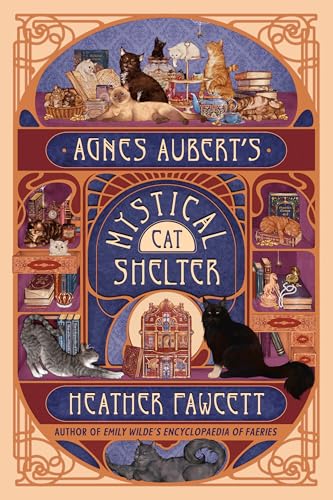 Agnes Aubert’s Mystical Cat Shelter by Heather Fawcett
Mogsy’s Rating: 4 of 5 stars
Genre: Fantasy
Series: Stand Alone
Publisher: Del Rey (February 17, 2026)
Length: 368 pages
Author Information: Website
With a title like that, it’s almost as if Heather Fawcett’s Agnes Aubert’s Mystical Cat Shelter was written to be the ultimate crowd pleaser. It’s honestly difficult to imagine anyone not being charmed by this one, at least a little. It’s got all the ingredients of a successful cozy fantasy, including a magical 1920s Montreal setting, a soft and slow-burning romance between a tenderhearted widow and a misunderstood wizard, and of course, at the center of it all, a house full of judgy cats.
The novel follows Agnes Aubert, a woman struggling to keep her small cat rescue afloat. The past few years have not been kind to her. After her husband’s sudden death, she was left to manage the shelter on her own, aided only by her sister and the occasional volunteer. They are constantly stretched thin, with too many cats in need of homes and never enough funds to cover the basic necessities plus veterinary care. And as if that wasn’t enough, Agnes is now faced with the near-impossible task of finding a new location after their previous building was destroyed by a couple of careless wizards having an impromptu duel in the streets. With winter closing in, if she cannot secure a new space, her animals will freeze. Yet what landlord in their right mind would agree to rent to a woman with dozens of stray cats which many still dismiss as little better than vermin?
Out of options, Agnes decides to take a chance on a suspiciously affordable property with a dubious reputation. While she has her misgivings, desperation leaves little room for pride. However, it doesn’t take long to discover why the rent is so cheap. Hidden in the basement is a secret magicians’ den run by the notorious wizard Havelock Renard, a man rumored to have once nearly brought about the end of the world. Agnes, however, has little interest in him or his legend. As long as she has a safe haven for her cats, she’s willing to put up with nearly anything. But when a rival from Havelock’s past resurfaces looking to settle an old score, the resulting conflict spills into Agnes’s carefully managed world. No longer able to ignore the magical chaos, she finds herself reluctantly drawn into a battle she never wanted to fight.
What follows next strikes a careful balance between the everyday realities of running a shelter and the steadily escalating trouble brewing downstairs, both literally and figuratively. Fawcett never loses sight of the practical details that shape Agnes’s life, like the routine of taking in strays, juggling adoption inquiries, as well as scraping together enough money for food, medicine, and bills. I was happy to see that the cats weren’t just thrown in to be cutesy. They’re essential to the story, each possessing their own quirks and, um, very strong opinions. Their presence keeps both our characters and the plot grounded, so that even when everything else blows up, they are a constant reminder of what’s important in Agnes’s life.
Speaking of which, characters are where this book really shines. Agnes’s world revolves around the cats, and she’s completely unapologetic about it. At the same time, there is a thread of grief running beneath her practicality and stubbornness. She’s also sensitive and deeply empathetic, with most of her quirks being coping mechanisms that prevent her emotions, which are always hovering near the surface, from breaking through. This is in stark contrast to Havelock, who despite his ominous reputation is socially awkward and comes across a little scatter brained. One gets the sense he’s not a fan of his bad rap but tolerates it by convincing himself he’d rather be feared and left alone. Watching them struggle to co-exist in this shared space is half the fun, especially when it turns out Havelock is allergic to cats! It’s a relationship that develops slowly, through small acts of kindness. In a way, these feel more meaningful and swoony than grand gestures ever will.
All that adds up to a cozy, relaxing read. The magic itself is handled with a light touch but definitely present and applied in some fun and creative ways, especially with the cats! I liked how Fawcett wrote these elements into the very fabric of the story without overwhelming it, but at the same time it’s more substantial than window dressing. The setting also plays its part, even though it’s clear that historical detail is not a priority. Still, the environment lends the book an old-world kind of charm through its descriptions and the culture of its close-knit French-Canadian neighborhoods.
In the end, Agnes Aubert’s Mystical Cat Shelter works because it knows exactly what kind of story it wants to be: a simple yet effective cozy fantasy, wistful and quirky in places to draw you in, but ultimately warm and comforting where it counts. It’s the kind of easy, low-stakes novel you want to curl up with after a long day, and even if you aren’t a cat person, it will warm your heart.
Book Review: Operation Bounce House by Matt Dinniman
Posted on February 22, 2026 13 Comments
I received a review copy from the publisher. This does not affect the contents of my review and all opinions are my own.
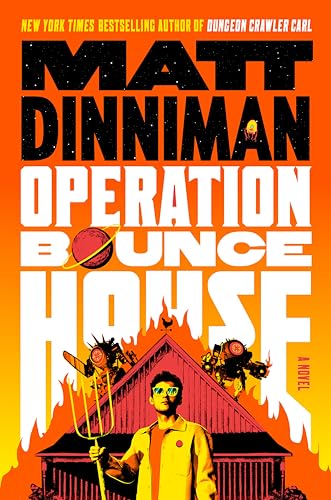 Operation Bounce House by Matt Dinniman
Mogsy’s Rating: 4 of 5 stars
Genre: Science Fiction
Series: Stand Alone
Publisher: Ace (February 10, 2026)
Length: 448 pages
Author Information: Website
Like many others, I came to Operation Bounce House as a fan of Dungeon Crawler Carl. Let’s face it, at this point I’m pretty much going to read anything Matt Dinniman writes, and what better way to enjoy more of his work while waiting for A Parade of Horribles? I’m also in need of a fun diversion, and honestly, this feels like one for the author too.
First, this isn’t LitRPG, and I’m glad. A one-off standalone like Operation Bounce House deserves the space to be its own thing. The story is set on New Sonora, a colony planet largely populated by farming families who have built stable, self-sustaining communities after generations of surviving without support from Earth. Our protagonist Oliver Lewis is a young colonist who lives on a ranch with his sister, maintaining his land with the help of their agricultural bots and an AI system named Roger. Life hasn’t been easy for them, but they’ve learned to make do. While the colony still bears the scars of past disasters, including the wreckage of crashed ships and the lingering grief of a devastating plague, it’s their home and they are fiercely proud of the life they have managed to build.
But everything changes when contact with Earth suddenly and fully reopens with instant communication and travel through a transfer gate that was long thought dormant. The reason for this unexpected drop-in? Repossession of the entire planet. And as if that wasn’t brazen enough, Earth’s government has contracted a powerful corporation to carry out the “eviction action,” and rather than deploying more traditional tactics, they’ve decided to turn the process into a commercial opportunity—a game. Bored, wealthy Earthers have been offered a chance to participate in Operation Bounce House, shelling out big bucks to design the own war mechs and remotely pilot them from their own homes as they carry their assault on the people of New Sonora. Faced with an enemy that treats invasion like entertainment and ignores the usual rules of war, Oliver and his fellow colonists must fight to survive, forcing them to think creatively and adapt in ways they never imagined.
This one’s for all you fans of a good underdog fight. Operation Bounce House literally pits a group of farmers against a mecha army controlled by what amounts to Twitch streamers. Hardly fair, you might think, but then Oliver and his friends aren’t as helpless as they look. They’ve got a few tricks up their sleeves, along with Roger, who is hands down the best part of the book and an AI you definitely wouldn’t want to cross. If you loved the chaotic energy of the AI in Dungeon Crawler Carl, you’ll recognize a similar sass here, though Roger is very much his own entity and apparently an expert in psychological warfare who doesn’t believe there’s any such thing as going too far. He’s like that crazy scary friend you’re glad is on your side.
But despite the AI stealing the show, this is also a very human story, full of camaraderie, shared love and loss. The characters are easy to root for, and as their personal stories are gradually revealed over time, Oliver and his inner circle grow more and more relatable. They are young, many of them are still uncertain about their futures. They’re also frequently reckless, another symptom of youth, yet trying their best to hold it together even as the world implodes around them. The plot occasionally eases up on its frenetic pace to spend time on these relationships, from messy romances to sibling dynamics, and of course, these are the moments that bring warmth to a story that might otherwise feel like all action and no heart.
Thing is, though, there is plenty of faction. And it is fast and brutal. The costs of the conflict are high, and Dinniman isn’t holding back. When terrible things happen, you are going to feel it, as in there’s not much room for emotional distance. Yet at the same time, there are flashes of humor that come through here and there, often just at the right moment to offer a bit of respite against the darkness. Even so, it is fair to say this is a more somber and hard-hitting book than many of Dinniman’s readers might expect.
Still, the author’s personal interests are clearly woven throughout this novel, like the gamer logic behind the invasion, the tactical planning before and during battles, and the band rehearsals that thread through Oliver’s life. It reads like a passion project, something Dinniman genuinely wanted to explore, and that enthusiasm comes through in the heightened emotions and sharper, more pointed humor.
In the end, Operation Bounce House felt like a satisfying detour. It is darker and in a way more grounded in what I feel is more traditional science fiction, but still unmistakably Matt Dinniman in that it delivers a fantastic genre read that doesn’t feel like the same old stuff.
Book Review: Nightshade & Oak by Molly O’Neill
Posted on February 20, 2026 5 Comments
I received a review copy from the publisher. This does not affect the contents of my review and all opinions are my own.
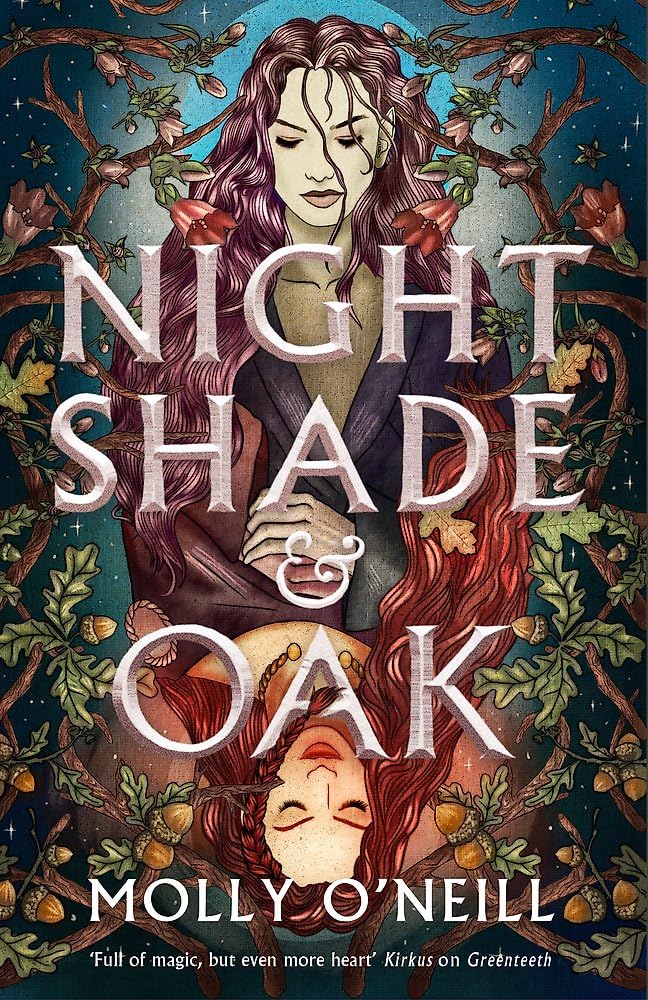 Nightshade & Oak by Molly O’Neill
Mogsy’s Rating: 3 of 5 stars
Genre: Fantasy
Series: Stand Alone
Publisher: Orbit (February 3, 2026)
Length: 304 pages
Author Information: Website
Going into Nightshade & Oak, I was genuinely excited. I really enjoyed Greenteeth, and one of the things Molly O’Neill does so well is blend mythology and folklore into something that feels more personal and grounded instead of grand but distant. That said, it’s hard not to compare the books. This one had similar foundations when it comes to setting and themes, and on paper it should have worked just as well. In the end, though, I still liked it, just not nearly as much.
The story opens on a battlefield in ancient Britain, following a brutal clash between the Iceni tribe and the Roman army. Mallt Y Nos, goddess of death, walks calmly through the carnage as she has always done, guiding the souls of the fallen to the afterlife. As she stops to tend to the body of a woman, however, she senses something wrong. Unbeknownst to her, the woman’s sister had been nearby, attempting a desperate spell to save her gravely wounded sibling. Instead, the magic backfires, catching Mallt in its effects and turning her mortal. Furious at the loss of her divinity, Mallt now must contend with all the physical weaknesses of having a human body, leaving her no choice but to bargain with the woman responsible if she hopes to reclaim her powers.
That woman turns out to be Belis, the magically gifted warrior daughter of Queen Boudicca. In trying to help her sister Cati’s soul, which is lingering in an in-between state, Belis has unwittingly bound her fate to a goddess, albeit a now diminished one. Still, Belis knows Mallt holds the key to reaching Annwn, the Otherworld, and will need a guide to survive and navigate her new mortal reality. If they can endure each other long enough to reach the realm of the dead, Belis may yet have another chance to save Cati. Reluctantly, the two women form a tenuous alliance, their goals aligned for now. But as they journey across the war-torn landscape, their quest grows ever more complicated and dangerous, especially with Roman forces on their tail, determined to hunt down the last surviving daughter of Boudicca and crush the rebellion for good.
Like Greenteeth, this novel is heavily inspired by folklore but it also weaves in historical events and figures anchored in real history. The author’s affinity for the mythology behind Mallt Y Nos is obvious here, and I liked her take on goddess’s story. At the same time, I couldn’t help feeling that the historical framework boxed the story in a bit. In a way, Boudicca’s fate, and by extension her daughters’, is a weight that hangs over everything.
Tonally, Nightshade & Oak is also a lot darker. There is war and reminders of it everywhere, creating an undercurrent of inevitability running through the story. That itself is not a flaw, of course, but I did miss the slightly offbeat charm and warmth that made the plot and characters of Greenteeth so endearing. Sure, Mallt’s adjustment to mortality has its moments, especially in the beginning, but overall, she and Belis didn’t quite win me over the same way. Even as their relationship deepened into something more towards the end, there was still that disconnect, largely because I never felt fully invested in it to begin with.
To O’Neill’s credit though, the plot here is much more ambitious, not simply a “go here, fetch this/fix that, rinse and repeat as necessary, then go home” structure. The stakes begin remarkably high and they keep expanding as the story builds. While Mallt and Belis are indeed set on a quest, it’s one that grows ever more complex than it first appears. And I admired that. That said, parts of the middle dragged, and I found it more difficult to stay engaged during those sections. The added layers made it richer, but also occasionally slower and more uneven.
In the end, Nightshade & Oak is a solid read and there’s a lot to love here with its themes of myth and history, gods made human, and love shaped by war. And yet, I just couldn’t shake the feeling that something was missing, perhaps that extra spark or emotional pull to truly bring it to life. Even so, I’ll absolutely keep reading whatever Molly O’Neill writes next, the promise of creative ideas blending history and fantasy always drawing me back.
Audiobook Review: A Box Full of Darkness by Simone St. James
Posted on February 14, 2026 10 Comments
I received a review copy from the publisher. This does not affect the contents of my review and all opinions are my own.
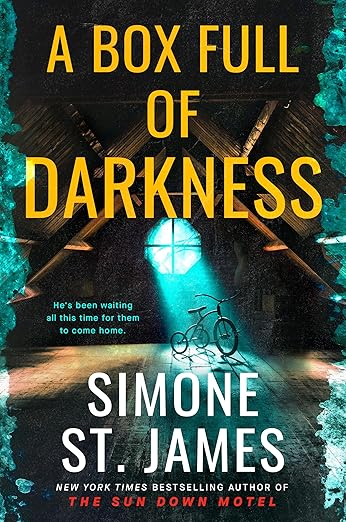 A Box Full of Darkness by Simone St. James
Mogsy’s Rating (Overall): 4.5 of 5 stars
Genre: Mystery, Horror
Series: Stand Alone
Publisher: Penguin Audio (January 20, 2026)
Length: 10 hrs and 17 mins
Author Information: Website
Narrators: Anna Caputo, Saskia Maarleveld, Ari Fliakos
Simone St. James is one of those authors whose work I’ll happily read without needing to know much going in because I’m just so confident that she’ll deliver. Which is why I went into A Box Full of Darkness almost completely blind, preferring to be surprised. As such, it’s safe to say I had high expectations, but this book still managed to blow me away. From the start, the very moment I realized we would be heading back to Fell, New York, I just knew this was going to be something special.
If you’ve read the author’s The Sun Down Motel, the setting is going to feel familiar. While it’s not a perquisite, returning readers will catch the subtle references and understand the layers of uneasiness that seem to permeate the small town. A Box Full of Darkness is a new story, centering on Violet, Vail, and Dodie Esmie, three siblings who reunite at their childhood home in Fell after being summoned by what they believe is the specter of their younger brother Ben, who disappeared years ago when he was only six years old. “Come home,” was what the message had said. The siblings had never been able to deny their beloved Ben anything when he was still with them, and they can’t now either.
Violet, the oldest, has always seen ghosts, and she has no doubt in the significance of those two simple words. Vail, the middle child, has been making a living as a UFO investigator, drawn to the otherworldly and unexplained in order to fill the void left by Ben’s mysterious disappearance. And then there’s Dodie, a hand and hair model whose unresolved grief from losing her little brother has left her unable to form healthy emotional relationships. Of course, everything changes now that it appears Ben is back, even if it’s not in the way they’d hoped. But is the message really from him? Or might it be something far more sinister?
That hook alone is hard to resist, containing echoes of a haunted house story but also with strong emphasis on family relationships and shared trauma. Each sibling carries the loss of Ben differently, with the bulk of the first half delving into how the boy’s disappearance has defined their lives in separate ways. To be clear, if you’re looking for a horror novel that dives straight into the thrills and chills, this isn’t that kind of book. It’s slower, more deliberate, and very much character driven. That’s what ultimately gives this story its weight.
It’s also why the multiple perspectives work so well here. Alternating POVs between the siblings reinforces the tensions embedded in their shared history, and St. James gives each of them a distinct voice, their individual personalities coming through loud and clear in the audiobook. Dodie’s narration is flippant and performative, projecting a confidence that masks her fragility. Vail carries a heavy burden of guilt, convinced that if he had acted differently, the outcome might have changed. And then there’s Violet, whose ability to see ghosts has shaped her life in the most heartbreaking ways, forcing her to hide a part of herself, leading to a breakdown, a divorce, and a strained relationship with her daughter. At times, we experience the same memory or event in slightly different ways, depending on how it is remembered.
The horror itself is classic St. James. This is a paranormal story, but doesn’t play out like a conventional haunting, even if it does contain a few familiar elements. The mystery surrounding Ben unfolds in ways that feel unexpected, and I liked that it avoids the most predictable ideas. The style here is subtle, eerie, and atmosphere-heavy, perfect for creating a sense of dread by accumulation, where every odd sighting or fragment of local lore adds to the town’s mystique. Fell becomes much like Stephen King’s Derry or Hawkins in Stranger Things, a place that feels complicit in the horror.
In the end, A Box Full of Darkness is definitely one of Simone St. James’ stronger novels, and it made for an absolutely brilliant listen in audio format. It’s a paranormal horror that hits all the right notes, with family drama and a payoff that is absolutely worth it. If we get more books set in Fell, I’m all for it. Already looking forward to what she writes next.

Book Review: Strange Animals by Jarod K. Anderson
Posted on February 10, 2026 10 Comments
I received a review copy from the publisher. This does not affect the contents of my review and all opinions are my own.
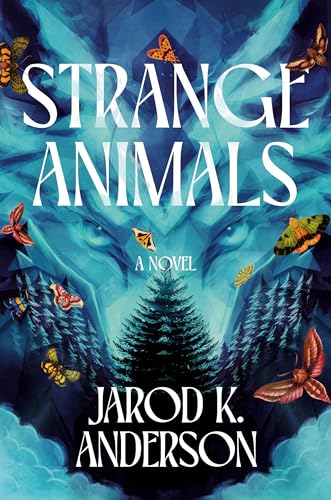 Strange Animals by Jarod K. Anderson
Mogsy’s Rating: 4 of 5 stars
Genre: Fantasy
Series: Stand Alone
Publisher: Ballantine Books (February 10, 2026)
Length: 320 pages
Author Information: Website | Twitter
In all honesty, Jarod K. Anderson’s Strange Animals is not typically the kind of book I would stick with, which is why it surprised me as much as it did. The novel is a strange kind of beast itself, but now I use that term affectionately. As weird and metaphysical and quirkily magical as it is, it somehow managed to overcome my usual struggle with these types of stories.
The novel follows an ordinary guy named Green, whose life suddenly goes completely sideways after a near-death experience involving a bus that most definitely ran him over. But then it also kind of didn’t. Like, what? At the moment of impact, time experienced something like a reset, and Green finds himself alive and well, like his fatal encounter never happened. From then on, he feels pulled towards the Appalachian wilderness, eventually ending up alone at a remote campground with a mysterious little acorn appearing in his pocket and tucked away like a good luck charm.
Not long after arriving, Green also realizes the woods around him are hiding more than he thought possible. He starts seeing things like creatures that shouldn’t exist, such as giant death moths, a fawn that looks like its made of brittle glass, and of course, the terrifying horned wolf that seems intent on stalking him. Fortunately for our discombobulated protagonist, that’s when a fellow camper steps in, an ancient looking woman named Valetina who is clearly more than she seems. She informs Green that his ability to see impossible creatures makes him something called a cryptonaturalist, just like her. She then agrees to take him under her wing, teaching him how to observe and understand the strange new world around him, just as a very real threat begins to emerge from the mountains.
Not gonna lie, the beginning of Strange Animals nearly lost me. To say the intro to this one is completely bizarro is an understatement. Green’s accident and subsequent inexplicable survival read like a fever dream, I had no idea what was going on, and I wasn’t even confident there would be much of a story here. The abstractness made me come close to calling it quits, and if it hadn’t been for Anderson’s easy, welcoming writing style, I very likely would have. Even when things got weird (and trust me, they did), the prose and Green’s personable voice was what kept things grounded and approachable, so I stuck with it. And I’m glad I did. Once the pieces started coming together, it became much easier to settle in, and yes, a coherent plot did eventually materialize.
What really worked for me were the themes. At its heart, Strange Animals is about humankind’s connection to nature and the idea that there’s more to the world than we notice in our day-to-day lives. As we have the ability to adapt the environment to ourselves and not the other way around, we also have the responsibility to act as its guardians. The cryptids in this book aren’t spectacles or monsters to be hunted down; they’re just like the more mundane and earthly animals around them that need conservation and the basic needs to survive. The best part is that none of these messages come across all that heavy-handed since they are universally relatable or simply common sense.
Of course, the characters also helped to sell it. Green is a likeable protagonist, and even as part of the supporting cast, Valentina easily stood out. The dynamic between them is fun, with the two of them playing their respective roles as the slightly in-over-his-head apprentice and the world-weary mentor. While their conversations frequently turn into philosophical discussions, the light humor keeps things from getting too tedious.
In the end, Strange Animals really caught me off guard. Admittedly, it’s a little odd and difficult to categorize, but somehow the novel made its little eccentricities work in its favor. Crazy to think how close I came to abandoning it, but I’m glad I didn’t. For some, it might take a bit of patience to get into, especially if you’re like me and not into the abstract or weird fiction. But stick with it, and you might also be surprised.
Book Review: Sibylline by Melissa de la Cruz
Posted on February 7, 2026 18 Comments
I received a review copy from the publisher. This does not affect the contents of my review and all opinions are my own.
 Sibylline by Melissa de la Cruz
Mogsy’s Rating: 2.5 of 5 stars
Genre: Fantasy, Romance
Series: Stand Alone
Publisher: G.P. Putnam’s Sons Books for Young Readers (February 3, 2026)
Length: 304 pages
Author Information: Website | Twitter
I find myself a little torn on my feelings for Sibylline by Melissa de la Cruz. I would say check it out if you’re a sucker for dark academia fantasy, but also be aware of the other major themes in the story. It doesn’t always seem to know what it wants to be, and in the end, that indecision is what dampens what could have been a much better read.
The story follows Atticus, Dorian, and Raven, three childhood friends with magical abilities who have always dreamed of attending the Sibylline school of magic together. However, when all three are sent rejection letters, they refuse to accept this as the end of the line and come up with a way to get inside the university anyway. After all, if they can’t enter as students, what’s stopping them from doing it as employees instead? After securing jobs as a professor assistant, a lab aide, and a library worker, the three begin sneaking into lectures, secretly auditing classes, and stealing access to restricted books. By slowly piecing together a magical education through unofficial means, they hope to better understand their own powers, which seem to grow stronger the longer they spend time on campus.
But their underground efforts soon uncover something rotten at the heart of Sibylline. Ancient magic stirring beneath its grand halls and rumors of a student’s mysterious death hint at a threat that may be tied to the very foundation of the school. As the trio are drawn deeper into their investigation, long-standing feelings and unspoken attractions between them also begin to surface, causing no small amount of friction within their relationship. Caught between keeping their heads down and confronting a danger they barely understand, Raven, Atticus, and Dorian must decide how far they’re willing to go for magic, even if it might tear their friendship apart.
While the premise holds a lot of potential with a setup that is undeniably fun, the execution doesn’t quite hold together. Just when the plot feels like it’s settling into a dark magic school mystery with just a sprinkling of romantic tension, it takes a sharp turn toward emotional angst to become a full-blown relationship drama—and one that is messy and distracting as hell at that. Of course, this was before I realized, at its core, Sibylline is actually a throuple romance. The sexual tensions burning between our three protagonists aren’t part of a supplementary side story running alongside the main narrative as I’d initially thought, but they are in fact THE main focus.
As you can imagine, the dark academia aspects and even the central mystery surrounding the school itself often take a backseat to entire chapters spent belaboring who is in love with whom. For those keeping track, Raven has been quietly pining for Atticus since they were children, but Atticus is in fact secretly love with Dorian, while for years Dorian has been carrying a torch for Raven. The tragedy is that all three are deeply invested in the wrong person, with none of their feelings fully returned. Cue the jealousies, hurt feelings, and overall an exhausting amount of mental turmoil born of unrequited love.
The result is that the mystery and horror elements get pushed out just as they’re starting to become interesting. This lack of balance is especially noticeable when the characters’ actual investigation is frequently interrupted by long stretches focused on their emotional spiraling, bringing the pace to a crawl. The shift feels even more jarring if you went into this novel expecting a very different kind of story, or even one aimed at a different age group. It’s interesting to note that Sibylline is published under a YA imprint, but it feels like it should be categorized as New Adult, given its mature themes and a sexually explicit threesome scene near the end that makes it less appropriate for younger teen readers.
In the end, Sibylline feels like a book full of good ideas that never quite come together. To be fair though, I wasn’t at all prepared for the primary focus of the story to be an overwrought and emotionally complicated three-way romance, but readers who are into that kind of dynamic will likely get way more out of this one than I did.


 The BiblioSanctum